
In short, ibid is no more!
Have you ever moved a sentence from one place to another in your manuscript only to realize that doing so had reordered your footnotes and resulted in an ibid following the incorrect citation? And then you had to go back and figure out which citation the ibid originally followed? Headaches!!
This is why I’m so happy that in its 17th Edition of the Chicago Manual of Style (CMOS), Chicago recommends doing away with ibid.
Chicago cites that in electronic formats that link to single footnotes, ibid can confuse the reader .
Chicago’s shortened note style
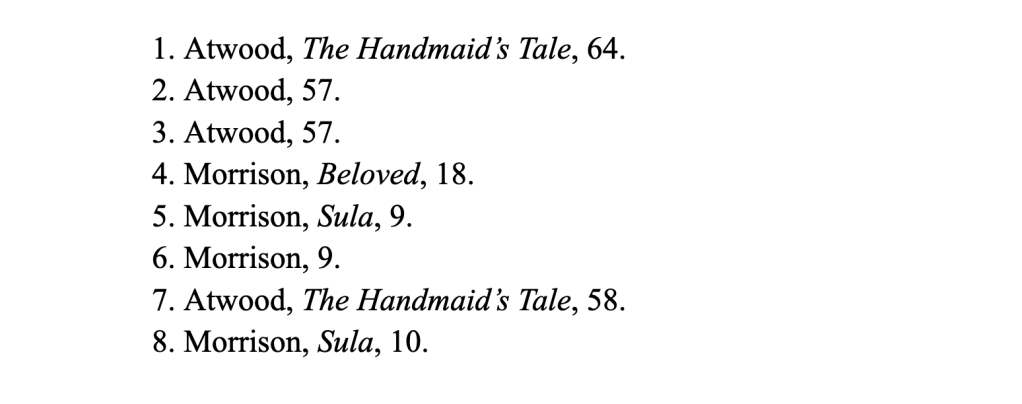
Notice that in entries that cite the last item cited, the entry is further abbreviated; the title is not included (no. 1–3). The page number, however, is always included, even if the page number is the same (no. 2–3).
Also notice that when an entry reappears later in the notes, the fuller version of the shortened entry is used (no. 5 and 8).
Even more good news!
No longer is it required to include the full citation in the first entry in your footnotes, as long as you have a bibliography.
So when your manuscript has a bibliography, you can use shortened notes exclusively. Yay!
It can be helpful for the reader, however, to have the full citation at their fingertips, which is why many publishers continue to use full citations in their first instance. But it’s nice to have options.
 TARYN SIROVE